

Living Room Property Management · Market Update
April and May mark the beginning of Portland’s peak leasing season — the time of year when demand picks up, homes show better, and it can be tempting to push rents higher simply because the calendar says you can. We want to offer a counterpoint to that instinct, grounded in what we’re actually seeing across the portfolio right now.
We intentionally structure a significant portion of our lease expirations to land this time of year. Everything looks a little better when the azaleas are blooming, homes move faster, and vacancy losses are lower. That’s a real financial advantage — shorter vacancy windows mean meaningful savings in lost rent, even if turnover costs remain. But the flip side is equally true: spring has everyone looking. Current tenants are antsy too — the same energy that drives leasing demand also has renters browsing listings, weighing their options, and wondering if now is the time to make a move. Retention strategy matters as much as leasing strategy right now.
The short version: the market is moving, tenants are signing, and our job is to help you make decisions that hold up twelve months from now — not just today.
The Renewal Picture
April renewals reflected a deliberate strategy: keep increases modest, prioritize term commitments, and reduce turnover heading into the season where it’s most likely to happen. The results backed that up. Roughly two-thirds of April renewals resulted in a signed 12- or 24-month lease. Of the remaining third, most rolled month-to-month by choice — typically paying a $100–$150/month premium for that flexibility, which the market is clearly supporting.
Where we offered 12-month renewals at the same rate or a nominal increase, tenants signed consistently and without significant pushback. Where owners opted for a 24-month term at a slight discount in exchange for long-term certainty, tenants signed those too. The appetite for stability on both sides of the lease is real.
It’s worth noting that this approach isn’t universal. We’ve taken on a handful of portfolios recently where rents had been set $300 to $1,000 below market — in those cases, the right move was to get into the unit, make the necessary improvements, and re-list at market rates. That’s a different conversation than a renewal strategy. When a home is significantly under market, closing that gap is straightforward and appropriate. What we’re talking about here is something else: homes that are already at or near market, where aggressive increases risk the tenant, the relationship, and the revenue.
The Leasing Market: Fast Where It Matters
We’re currently marketing roughly a third of what we had available at this time last year, and a third of what we had on the market just a month ago. That’s not a small portfolio story; it’s a supply story. High-quality rentals hitting the market at the right strategic price, combined with renewal conversations that remove friction for good tenants — that combination is what keeps a portfolio full. When availability this low is the result of retention working, that’s something worth noting. And when a home does come available, it’s ready, it shows well, and it moves.
It’s worth noting the context behind those fast lease-ups. We came out of a winter and early spring where homes that weren’t in excellent condition — or were priced above what renters felt was fair — sat. Renters today have options and they’re using them. The homes moving quickly now are the ones that were ready: updated, clean, and priced at a rate the market can sustain long-term. For owners who took our advice early on condition and pricing, this season is rewarding that decision. For those who waited, the refresh happened on a tighter timeline and a tighter budget — but the lesson is the same. The market’s tolerance for “good enough” has narrowed.
What Zillow Says About Portland & Vancouver
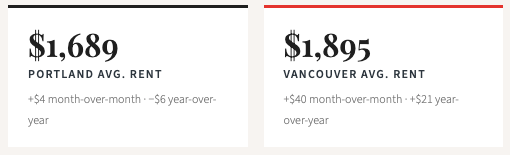
Both markets are rated Warm by Zillow as of May 9th. Portland’s average is essentially flat year-over-year — down $6 — with a modest $4 bump from April to May. Vancouver is telling a different story: up $21 year-over-year and up $40 just in the last month. It’s an early but meaningful signal that Vancouver is absorbing demand in a way Portland has not yet fully reflected in headline numbers.
Portland’s citywide average of $1,689 across all property types and bedroom counts captures a wide range — from studios to four-bedroom homes. For the type of homes we manage, single-family and small multifamily in the $1,800–$3,200 range, the relevant comparison is narrower. But the directional read is consistent: Portland rents are flat, Vancouver rents are ticking up, and neither market is overheated.
A Note for Owners of Studios and Urban Units
Not every property type is moving at the same pace. Studios and one-bedroom units — particularly in urban cores and condo buildings — are taking longer. We’ve seen listings in Northwest Portland and along the waterfront sit for 60+ days, while comparable inventory in inner Southeast clears in under two weeks. This isn’t new, but it’s worth naming directly.
If you own a studio or urban one-bedroom, here’s our honest read and what we’d recommend: